
































If something goes wrong on a project, one question almost always follows. What actually happened?
In industries like construction and the built environment, that question can carry serious consequences. A safety incident, a contractual dispute, or a regulatory inspection can quickly become complicated if the evidence is unclear or incomplete.
This is where audit trails matter.
A strong audit trail creates a clear, chronological record of what happened, who did what, and when decisions were made. In practical terms, it gives businesses the evidence they need to understand events, improve processes, and demonstrate compliance when regulators, insurers, or clients come calling.
But not all audit trails are equal. Paper forms, scattered spreadsheets, and retrospective reports often fall apart when they are needed most.
The difference between a weak audit trail and one that truly stands up often comes down to how data is captured.
Why reliable audit trails matter
Reliable records play a central role in workplace safety and risk management.
The Health and Safety Executive highlights that keeping accurate incident records helps organisations identify patterns of accidents and injuries, which supports better risk assessment and prevention strategies.
In other words, records are not just about proving what happened. They help organisations understand why things happen and how to prevent them happening again.
For construction companies and other operational businesses, audit trails are also essential when dealing with safety incidents, contractual disputes, regulatory compliance, insurance claims, and quality inspections.
Without reliable records, businesses can find themselves relying on memory, incomplete documentation, or conflicting reports. That makes investigations slower and risk harder to control.
Detailed records, on the other hand, demonstrate that a company has taken reasonable steps to manage risks and follow proper procedures. This can be crucial when defending against liability claims or regulatory scrutiny.
The problem with reconstructed records
Many organisations still assemble audit trails after the fact.
Someone writes up a report at the end of the day. A spreadsheet is updated a week later. Photos are stored somewhere on a phone.
The problem is simple. Memory fades and context disappears.
Construction sites, service teams, and operational environments move quickly. Trying to recreate events later often leads to missing information, inconsistent documentation, or conflicting accounts.
Research into construction documentation shows that retrospective record keeping often results in fragmented data spread across paperwork, emails, and spreadsheets. When audits arrive, teams may end up chasing documents and filling gaps with estimates.
That creates real risk.
Important details can be missed. Compliance becomes harder to prove. Disputes become more difficult to resolve. Administrative work increases.
The alternative is to capture evidence at the moment the work happens.
Capturing information as work happens
A reliable audit trail begins with reliable data.
That means information recorded by the people doing the work, at the time the work takes place. Not hours or days later.
Digital tools make this far easier. Instead of relying on paperwork or delayed reporting, teams can capture data directly from site through mobile apps and connected systems.
Real-time reporting tools improve compliance, reduce administrative delays, and increase the accuracy of operational data.
When information is captured this way, several things change.
Accuracy improves, because details are recorded while they are still fresh. Visibility increases, because managers and office teams can see activity in real time rather than waiting for end-of-day reports. Most importantly, audit trails begin to build themselves as part of everyday work.
Over time, that record becomes a powerful operational asset.
Turning everyday activity into reliable records
This is where well-designed software can make a real difference.
Rather than forcing businesses to adapt to rigid systems, custom software can be built around the way teams already work. When the technology fits naturally into existing workflows, capturing useful information becomes effortless.
Switchplane takes exactly this approach. By working closely with organisations to understand how their teams operate, the company builds tailored systems that automate processes, connect data, and create a clear operational record across the business.
In practice, this often means replacing fragmented tools with systems that capture information in real time.
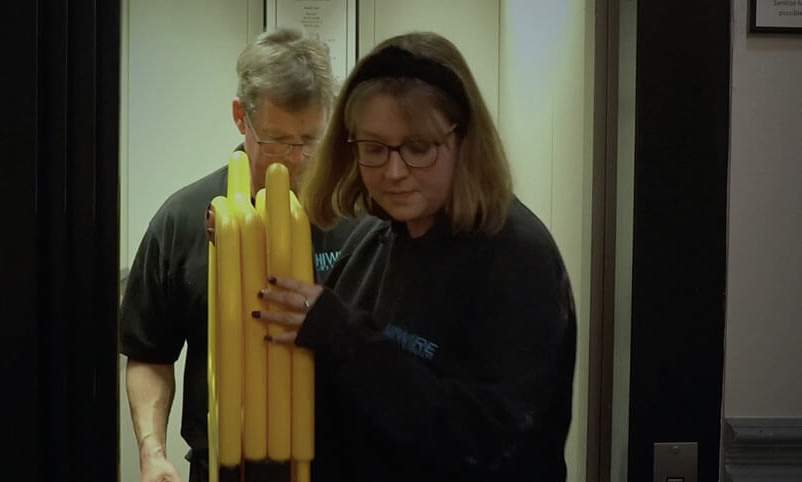
Take HiWire Lift Services as an example. As the lift maintenance company grew, the administrative burden around job sheets and service reports increased. Engineers were completing work on site, but much of the documentation still relied on manual processes.
Working with Switchplane, the business introduced a staff portal and mobile app designed specifically for their workflow. Engineers can now record their work directly through the app while they are on site. Job sheets, service reports, and time records are captured as part of the process rather than reconstructed later.
For the engineers, this reduces paperwork and makes it easier to track previous visits and service history. For the business, it creates a clear digital record of maintenance activity that can be referred to whenever questions arise.
The same principle applies in other sectors where reliable documentation is essential.
Jen, an NHS dietitian, experienced a different kind of audit challenge. Like many Allied Health Professionals, she needed to maintain records of her Continuing Professional Development in case she was selected for a regulatory audit. The difficulty was that her evidence was scattered across emails, notes, and documents.
Switchplane worked with Jen and other healthcare professionals to create Julia, a platform that allows users to record their CPD activities and store supporting evidence in one place. Through a web portal and mobile app, professionals can log learning activities as they happen and generate reports if an audit takes place.
Instead of scrambling to gather documentation when required, the audit trail already exists.
The same thinking can apply to operational environments such as warehouses and logistics operations.
At H&B Supplies, Switchplane developed a suite of apps to support warehouse staff with tasks such as picking, packing, and stock replenishment. As employees move through these workflows, the system records operational data automatically. Office teams can see stock movements and warehouse activity in real time, improving visibility and efficiency.
At the same time, the system creates a structured digital record of inventory movements and operational activity. What was previously a series of disconnected processes becomes a traceable and reliable operational history.
From documentation to insight
One of the most interesting things about reliable audit trails is that their value extends far beyond compliance.
When organisations begin capturing operational data consistently, they also gain new insight into how their business works.
Safety audits, for example, help organisations identify hazards, improve training, and refine processes. When accurate records are available, patterns start to emerge.
Recurring safety issues become easier to spot. Operational bottlenecks become visible. Inefficient workflows become easier to address.
This turns audit trails into something far more valuable than a defensive tool.
They become a foundation for continuous improvement.
Instead of reacting to problems after they occur, organisations can begin identifying and addressing risks earlier.
Building audit trails that stand up
For organisations operating in high-risk environments, reliable records are no longer optional.
Regulations such as the Reporting of Injuries, Diseases and Dangerous Occurrences Regulations require businesses to keep records of reportable incidents and make them available to authorities when required.
But the benefits go beyond compliance.
Clear records protect businesses, support safer workplaces, and create stronger operational oversight.
Building audit trails that truly stand up usually comes down to three things:
- First, capturing data at the source. Information recorded at the time the work happens is always more reliable than information reconstructed later.
- Second, structuring workflows so that teams follow consistent processes.
- Third, bringing operational data together in centralised systems, rather than scattering it across paperwork and disconnected tools.
When those elements come together, audit trails stop being an administrative burden.
They become a natural outcome of well-designed systems and well-supported teams.
And when questions arise about what happened on a project or within an organisation, the answer is already there.
Clear, complete, and ready when it matters most.
Audit trails should not be something teams scramble to assemble after the fact. When the right systems are in place, they develop naturally as part of everyday work. The real opportunity is not just reducing administrative burden but creating a clearer, more reliable picture of what is happening across your operations.
Switchplane works with organisations in construction, and other operational industries, to design software that captures the right data at the right moment, connects teams, and turns everyday activity into meaningful insight. If you would like to explore how stronger audit trails could support safer, more resilient operations in your business, we would be glad to start that conversation.
Get in touch
If you’re looking to reduce manual admin and create stronger, more reliable audit trails across your operations, contact us today for a chat.

References:
- https://www.hse.gov.uk/simple-health-safety/reporting-accidents-ill-health.htm
- https://www.hse.gov.uk/riddor/
- https://www.hse.gov.uk/riddor/reportable-incidents.htm
- https://www.hse.gov.uk/riddor/what-must-i-keep.htm
- https://www.hse.gov.uk/riddor/specified-injuries.htm
- https://www.legislation.gov.uk/uksi/2013/1471/contents
- https://en.wikipedia.org/wiki/Reporting_of_Injuries,_Diseases_and_Dangerous_Occurrences_Regulations
- https://www.highspeedtraining.co.uk/hub/riddor-reporting-accident-at-work/
- https://uk.rs-online.com/web/content/discovery/ideas-and-advice/riddor-regulations-guide